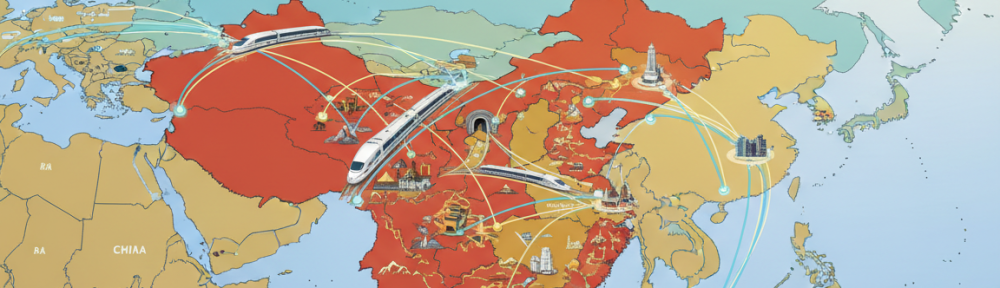
By mid-2025, over more than 150 nations had signed agreements with the Belt and Road Initiative. Total contracts and investments went beyond roughly US$1.3 trillion. Together, these figures showcase China’s prominent footprint in global infrastructure development.
The BRI, initiated by Xi Jinping in 2013, brings together the Silk Road Economic Belt with the 21st-Century Maritime Silk Road. It serves as a Belt and Road Cooperation Priorities keystone for long-term economic partnerships and geopolitical collaboration. It leverages institutions like China Development Bank and the Asian Infrastructure Investment Bank to fund projects. Projects range from roads, ports, railways, and logistics hubs stretching across Asia, Europe, and Africa.
Policy coordination sits at the heart of the initiative. Beijing must harmonise central ministries, policy banks, and state-owned enterprises with host-country authorities. This involves negotiating international trade agreements and managing perceptions of influence and debt. This section examines how these layers of coordination shape project selection, financing terms, and regulatory practices.

Main Takeaways
- BRI’s scale—over US$1.3 trillion in deals—makes policy coordination a strategic priority for delivering results.
- Chinese policy banks and funds sit at the centre of financing, tying domestic planning to overseas projects.
- Coordination requires balancing host-country needs with international trade agreements and geopolitical concerns.
- Institutional alignment affects project timelines, environmental standards, and private-sector participation.
- Grasping these coordination mechanisms is essential for assessing the BRI’s long-term global impact.
Origins, Trajectory, And Global Footprint Of The Belt And Road Initiative
The Belt and Road Initiative emerged from Xi Jinping’s 2013 speeches describing the Silk Road Economic Belt and the 21st-Century Maritime Silk Road. It aimed to foster connectivity through infrastructure, spanning land and sea. Initially, the focus was on developing ports, railways, roads, and pipelines to enhance trade and market integration.
Institutionally, the initiative is anchored by the National Development and Reform Commission and a Leading Group that connects the Ministry of Commerce and the Ministry of Foreign Affairs. China Development Bank and China Exim Bank—alongside the Silk Road Fund and AIIB—finance projects. State-owned enterprises, including COSCO and China Railway Group, execute many contracts.
Many scholars describe the BRI Policy Coordination as a mix of economic statecraft and strategic partnerships. It seeks to globalise Chinese industry and currency while expanding China’s soft power. This lens underscores how policy alignment supports project goals, as ministries, banks, and SOEs coordinate to advance foreign-policy objectives.
Phases of development map the initiative’s trajectory from 2013 to 2025. The first phase, 2013–2016, focused on megaprojects like the Mombasa–Nairobi SGR and the Ethiopia–Djibouti Railway, financed mainly by Exim and CDB. The 2017–2019 phase saw rapid expansion, with significant port investments and growing scrutiny.
Between 2020 and 2022, pandemic disruption drove a shift toward smaller, greener, and digital projects. By 2023–2025, the focus turned to /”high-quality/” and green projects, yet on-the-ground deals continued to favor energy and resources. This reveals the tension between stated goals and market realities.
Participation figures and geographic spread illustrate the initiative’s evolving reach. By mid-2025, around 150 countries had signed MoUs. Africa and Central Asia rose as leading destinations, overtaking Southeast Asia. Leading recipients included Kazakhstan, Thailand, and Egypt, and the Middle East surged in 2024 on the back of major energy deals.
| Metric | 2016 High | 2021 Low Point | Mid-2025 |
|---|---|---|---|
| Overseas lending (estimated) | US$90bn | US$5bn | Resurgence with US$57.1bn investment (6 months) |
| Construction contracts (6 months) | — | — | US$66.2bn |
| Participating countries (MoUs) | 120+ | 130+ | ~150 |
| Sector distribution (flagship sample) | Transport 43% | Energy 36% | Other 21% |
| Cumulative engagements (estimate) | — | — | ~US$1.308tn |
Regional connectivity programs under the initiative span Afro-Eurasia and touch Latin America. Transport projects dominate, while energy deals have surged in recent years. These participation patterns highlight regional and country-size disparities that feed debates on geoeconomic competition with the United States and its partners.
The Belt and Road Initiative is designed as a long-term project that extends beyond 2025. Its combination of institutional design, funding mechanisms, and strategic partnerships keeps it central to debates about global infrastructure development and shifting international economic influence.
Belt And Road Policy Coordination
Coordinating the Facilities Connectivity blends Beijing’s central-local coordination with on-the-ground arrangements in partner states. Beijing’s Leading Group and the National Development and Reform Commission work with the Ministry of Commerce and China Exim Bank. This supports alignment across finance, trade, and diplomacy. Project-level teams from COSCO, China Communications Construction Company, and China Railway Group execute cross-border initiatives with host ministries.
Coordination Tools Between Chinese Central Bodies And Host-Country Authorities
Formal tools include memoranda of understanding, bilateral loan and concession agreements, and joint ventures. They influence procurement choices and dispute-resolution venues. Central ministries define broad priorities as provincial agencies and state-owned enterprises handle delivery. This central-local coordination allows Beijing to leverage diplomatic influence using policy instruments and financing from policy banks and the Silk Road Fund.
Host governments negotiate local-content rules, labor terms, and regulatory approvals. In many cases, a single ministry in the partner country serves as the primary counterpart. Yet, project documents can route disputes to arbitration clauses favoring Chinese or international forums, depending on the deal.
How Policy Aligns With Partners And Alternative Initiatives
As project design has evolved, China increasingly engages multilateral development banks and creditors for co-financing and acceptance from international partners. Co-led restructurings and MDB participation have expanded, altering deal terms and oversight. Strategic economic partnerships now sit beside PGII and Global Gateway offers, giving host states greater leverage.
G7, EU, and Japanese initiatives push for higher transparency and reciprocity standards. This pressure nudges policy alignment in areas like procurement rules and debt treatment. Some countries leverage parallel offers to secure improved financing terms and stronger governance commitments.
Domestic Regulatory Shifts With ESG And Green Guidance
China’s Green Development Guidance introduced a traffic-light taxonomy, classifying high-pollution projects as red and discouraged new coal financing. Domestic regulatory changes mandate environmental and social impact assessments for overseas lenders and insurers. This lifts expectations around sustainable development projects.
Adoption of ESG guidance varies by project. Renewables, digital, and health projects have expanded under a green BRI push. At the same time, resource and fossil-fuel deals have persisted, revealing gaps between rhetoric and practice in environmental governance.
For host countries and international partners, clear standards on ESG and procurement improve project bankability. Blends of public, private, and multilateral finance make small, co-financed projects more deliverable. This shift is vital to long-term policy alignment and resilient strategic economic partnerships.
Financing, Implementation Performance, And Risk Management
BRI projects rest on a complex funding structure that combines policy banks, state funds, and market sources. Major contributors include China Development Bank and China Exim Bank, plus the Silk Road Fund, AIIB, and New Development Bank. Recent trends point to a shift toward project finance, syndicated loans, equity stakes, and local-currency bond issuance. This diversification is intended to reduce direct sovereign exposure.
Private-sector participation is rising via Special Purpose Vehicles (SPVs), corporate equity, and Public-Private Partnerships (PPPs). Major contractors, such as China Communications Construction Company and China Railway Group, often back these structures to limit sovereign risk. Commercial insurers and banks work with policy lenders in syndicated deals, illustrated by the US$975m Chancay port project loan.
The project pipeline saw significant changes in 2024–2025, with a surge in construction contracts and investments. The current pipeline includes a diverse sector mix: transport projects dominate in count, energy projects in value, and digital infrastructure, including 5G and data centers, across various countries.
Delivery performance varies widely. Large flagship projects often encounter cost overruns and delays, as with the Mombasa–Nairobi SGR and the Jakarta–Bandung HSR. In contrast, smaller, local projects tend to have higher completion rates and quicker benefits for host communities.
Debt sustainability is a key driver of restructuring talks and new mitigation tools. Beijing has engaged in the Common Framework and bilateral negotiations, participating in MDB co-financing on select deals. Mitigation tools include maturity extensions, debt-for-nature swaps, asset-for-equity exchanges, and revenue-linked lending to ease fiscal burdens.
Restructurings demand balancing creditor coordination with market credibility. Pragmatism is evident in China’s participation in Zambia’s restructuring and maturity extensions for Ethiopia and Pakistan. The goal is to sustain project finance viability while safeguarding sovereign balance sheets.
Operational risks can come from overruns, low utilisation, and compliance gaps. Certain rail links fall short on freight volumes, and labour or environmental disputes can bring projects to a halt. These issues impact completion rates and raise concerns about long-term investment returns.
Geopolitical risks complicate deal-making via national-security reviews and shifting diplomatic stances. U.S. and EU screening of foreign investment, sanctions, and selective project cancellations add uncertainty. The 2025 withdrawal by Panama and Italy’s earlier exit illustrate how political shifts can reshape project prospects.
Mitigation tools include contract design, diversified funding, and co-financing with multilateral banks. Stronger procurement rules, ESG screening, and greater private-capital participation aim to reduce operational risks and strengthen debt sustainability. Blended finance and MDB co-financing are key to scaling projects while limiting systemic exposure.
Regional Impacts And Case Studies Of Policy Coordination
China’s overseas projects now shape trade corridors from Africa to Europe and from the Middle East to Latin America. Policy coordination matters where financing, local rules, and political conditions intersect. This section examines on-the-ground dynamics in three regions and the implications for investors and host governments.
Africa and Central Asia rose to the top by mid-2025, driven by roads, railways, ports, hydropower, and telecoms. Examples such as Kenya’s Standard Gauge Railway and the Ethiopia–Djibouti line demonstrate how regional connectivity programs focus on trade corridors and resource flows.
Resource dynamics often determine deal terms. Large loans often follow energy and mining projects in Kazakhstan and regional commodity exports. China is a major creditor in several countries, prompting debt restructuring talks in Zambia and co-led restructurings in 2023.
Policy coordination lessons include co-financing, smaller contracts and local procurement to reduce fiscal strain. Stronger environmental and social safeguards improve project acceptance and lower delivery risk.
Europe: ports, railways, and rising pushback.
In Europe, investments clustered in strategic logistics hubs and manufacturing. COSCO’s ascent at Piraeus reshaped the port into an eastern Mediterranean gateway and triggered scrutiny on security and labour standards.
Rail projects such as the Belgrade–Budapest corridor and upgrades in Hungary and Poland show how railways re-route freight toward Asia. Europe’s response included tighter FDI screening and alternative co-financing through the European Investment Bank and EBRD.
Political pushback stems from national-security concerns and demands for higher procurement transparency. Joint financing and stricter oversight are key tools to reconcile connectivity goals with political sensitivities.
Middle East and Latin America: energy investments and logistics hubs.
The Middle East saw a surge in energy deals and industrial cooperation, with large refinery and green-energy contracts concentrated in Gulf states. These projects often rely on resource-backed financing and sovereign partners.
In Latin America, headline projects held on despite falling overall flows. The Chancay port in Peru stands out as a deep-water logistics hub that will shorten shipping times to Asia and serve copper and soy supply chains.
Each region must contend with political shifts and commodity-price volatility that influence project viability. Coordinated risk-sharing, alignment with host-country development plans, and clearer procurement rules can manage these uncertainties.
Across regions, practical policy coordination favors tailored local models, transparent contracts, and blended finance. These approaches open space for private firms—including U.S. service providers—to support upgraded ports, logistics hubs, and related supply chains.
Closing Thoughts
The Belt and Road Policy Coordination era is set to shape infrastructure and finance from 2025 to 2030. In a best-case scenario, debt restructuring succeeds, co-financing with multilateral banks increases, and green and digital projects take priority. The base case remains mixed, expecting steady progress alongside fossil-fuel deals and selective project withdrawals. Risks on the downside include weaker Chinese growth, commodity-price volatility, and geopolitical tensions that trigger cancellations.
Academic analysis suggests the Belt and Road Initiative is reshaping global economic relationships and competition. Its long-run success relies on strong governance, transparency, and effective debt management. Effective policy requires Beijing to balance central planning with market-based financing, strengthen ESG compliance, and deepen engagement with multilateral bodies. Host governments must advocate for open procurement, sustainable terms, and diversified funding to mitigate risks.
For U.S. policymakers and investors, practical actions are evident. They should engage via transparent co-financing, support stronger ESG and procurement standards, and monitor dual-use risks and national-security concerns. Investment strategies should focus on local capacity-building and resilient project design aligned with sustainable development and strategic partnerships.
The Belt and Road Policy Coordination is viewed as an evolving framework at the nexus of infrastructure, diplomacy, and finance. A sensible approach combines careful risk management with active cooperation to promote sustainable growth, accountable governance, and mutually beneficial partnerships.
Related: How to Structure a BRI Infographic for Maximum Readability