Have you ever thought about how a single valve under your sink can help prevent water damage and avoid pricey plumbing fixes? An angle stop valve, also known as an angle valve, is a basic manual shut-off valve. It controls water to one fixture without shutting off the whole house. Its design, with an inlet and outlet at a 90-degree angle, makes it perfect for tight spaces behind sinks, toilets, and appliances.
Continue reading about Angle Stops Plumbing
A closer look at angle stop valves shows why they matter. They are often installed under kitchen and bathroom sinks, behind toilets, and near washing machines and water heaters. In commercial settings, like hotels and restaurants, they allow staff to isolate fixtures for maintenance without disrupting other services.
Modern angle stop valves use a quarter-turn mechanism for quick shut-off. Older models, with multi-turn stems, are more common in older homes. The valve body, stem, handle, and internal seals are essential parts. Brass is the preferred material for residential use due to its strength and corrosion resistance. Stainless steel and chrome-plated brass are options for specific needs.
Installation Parts Supply and other plumbing distributors offer a wide selection. This allows homeowners and contractors to find valves that meet their material and connection requirements. The benefits of angle stop valves include reduced downtime during repairs, lower risk of water damage, and affordable local control of plumbing fixtures.
Key Takeaways
- Angle stop valves allow you to shut off one fixture without turning off the main water supply.
- The L-shaped design saves space in tight installations under sinks and behind toilets.
- Quarter-turn valves provide quick shut-off, whereas older houses commonly use multi-turn stem designs.
- Brass is preferred for residential applications; stainless steel and chrome-plated brass are alternatives.
- Contractors and DIYers can find a broad selection through Installation Parts Supply.
What Angle Stop Valves Are
Angle stop valves manage water flow to fixtures needing a 90-degree turn. They are important for homeowners and professionals. This short guide answers common questions about angle stop valves, explaining them in simple terms.
Located near sinks, toilets, and ice makers, these valves enable quick shut-off for maintenance. They are known for their compact size, clear indication of open or closed status, and the option for quarter-turn or multi-turn operation.
Main Components And Materials
Valve bodies are made from different materials, including brass, stainless steel, and chrome-plated brass. Brass is widely used due to its precision machining, high tensile strength, and corrosion resistance. It meets potable water standards, making it a favorite among brands like Moen and Delta.
Stainless steel is preferred in areas where corrosion and hygiene are critical, such as coastal homes and food-service establishments. Chrome-plated brass offers a shiny appearance while maintaining a robust brass core for durability and leak prevention.
The internal components include a valve stem, handles or knobs, and seals and gaskets for watertight connections. Common seals include rubber or synthetic O-rings, ferrules in compression fittings, and washers in multi-turn designs.
How Angle Stop Valves Operate
Operation varies based on the mechanism. Quarter-turn valves, using a ball or cartridge, open or close with a 90-degree turn. They provide fast shut-off and clear status indication. Multi-turn valves, on the other hand, require several rotations to seat the seal, relying on a rising stem and washer.
Connection types include compression, threaded, push-fit, and sweat/soldered. Compression fittings use a ferrule and nut for easy installation. Push-fit models snap on without tools. Threaded valves require pipe thread sealant, while sweat fittings need soldering for a permanent copper connection.
Sealing occurs through washers, O-rings, or ferrules pressing against valve seats. Common failure points include worn washers, brittle O-rings, and ferrule deformation over time. Regular use and occasional stem lubrication can help extend the valve’s lifespan.
Types Of Angle Stop Valves With Key Features
Understanding the right valve for your needs begins with material types and their applications. This guide explores materials, connection methods, and design differences. It helps you choose the best valve for your home, marine, medical, or commercial setting.
Material-Based Options And Benefits
Brass angle valves are common in homes due to their ability to resist corrosion and their cost-effectiveness. Many modern brass valves are lead-free, complying with U.S. drinking water standards.
Stainless steel angle valves are ideal for coastal, medical, and food-service environments. They offer enhanced corrosion resistance along with hygienic performance. Grade 316 stainless steel is often used for the most demanding conditions.
A chrome-plated brass valve combines a brass core with a polished finish. This finish keeps a clean appearance and resists tarnish. Still, the plating may chip under strong impact.
Connection Method Variations
Compression valves use a nut and ferrule for a clamp-on connection. They require no soldering and are ideal for DIY projects. Always replace the ferrule to ensure a tight seal.
Pipe-threaded valves attach by way of threaded connections and need sealant to remain leak-free. They are common in both residential and commercial settings.
A push-fit valve allows for fast, tool-free, snap-on installation. They use internal seals and gripping teeth for a quick retrofit. This makes them a popular choice for many applications.
Soldered or sweat valves create a lasting bond to copper piping. Professionals prefer them for installations where durability is key.
Design And Functional Differences
Quarter-turn ball-style stops provide quick shut-off and clear status indicators. In contrast, multi-turn compression stops may wear faster under heavy use due to smaller internal parts.
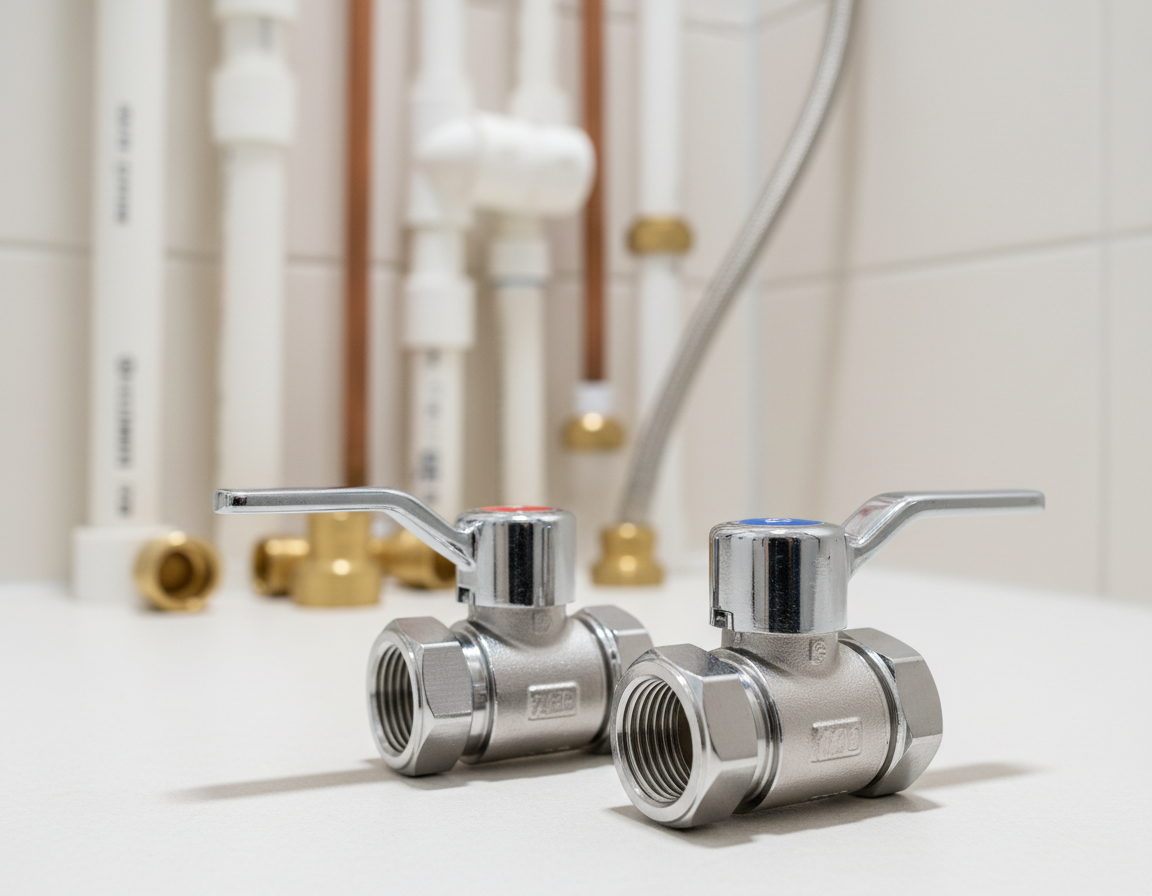
Handle designs range from lever styles to decorative knobs. Color coding for hot and cold improves usability. Finishes also impact longevity and appearance.
Each model may differ in its pressure and temperature ratings. Residential valves typically handle 40–80 psi. Commercial and industrial valves have higher ratings; always check specifications before purchase.
| Characteristic | Brass Angle Valves | Stainless Steel Angle Valves | Chrome-Plated Brass Valve |
|---|---|---|---|
| Ideal for | Residential baths and kitchens | Marine settings, medical spaces, food-service | Visible fixtures where looks matter |
| Corrosion protection | Reliable | Excellent (316 grade) | Generally good, based on plating quality |
| Installation types | Compression, threaded, sweat/soldered | Threaded, compression, welded connections | |
| Average cost | Moderate | More expensive | Moderate or premium |
| Common benefits | Durability, value, angle stop valve benefits for homes | Extended lifespan, hygiene, and extreme corrosion resistance | Attractive finish, good durability when cared for |
Material, connection method, and design details should all be considered when selecting angle stop valves. Matching these to your environment and needs ensures long-term value and reliable service.
Installing And Troubleshooting Angle Stop Valves
Prior to starting, prepare the workspace and gather all necessary tools and components. Turn off the main water supply and open a faucet below to drain any remaining water. Measure the supply pipe accurately; common sizes include 1/2″ and 3/8″. Take the old valve to the store to find a match.
Inspect the supply pipe for any corrosion or visible damage. Replace any damaged sections before installation. You’ll need a tubing cutter, two adjustable wrenches, a deburring tool, and non-petroleum pipe joint compound safe for drinking water. Also, have replacement ferrules and nuts ready if needed.
Here’s how to install a compression valve correctly. Cut the pipe straight with a tubing cutter. Deburr the end to ensure a clean fit and prevent damage.
Install the compression nut onto the pipe, then slide on the brass ferrule. Insert the pipe fully into the valve until it stops. Hand-tighten the nut. Use two wrenches to tighten the nut further, but avoid over-tightening.
Hook up the fixture supply line as instructed by the manufacturer. Apply a thin layer of non-petroleum pipe joint compound to the ferrule for better sealing during installation.
Gradually increase the water pressure and inspect the connection for leaks. Minor leaks may resolve as the ferrule seats. If leaks continue, tighten another quarter-turn. If leaks persist, inspect the ferrule, nut, and valve for damage.
Common installation issues usually call for specific repairs. Leaks often indicate a damaged ferrule, cracked nut, or faulty valve body. Replace the damaged part. Stiff or stuck handles usually result from mineral buildup; clean and apply a non-toxic lubricant. Seized valves or corroded bodies require full replacement.
Common mistakes should be avoided: never reuse an old ferrule, do not over-tighten, and make sure the valve faces the correct direction. Mixing incompatible metals can cause corrosion; use dielectric unions for dissimilar metals.
Seek professional help when the supply pipe is heavily corroded, when soldered connections are necessary, or when leaks remain after troubleshooting. Proper maintenance and troubleshooting ensure reliable fixtures and extend plumbing system lifespan.
Importance, Uses, And Maintenance Of Angle Stop Valves
Angle stop valves play a critical role in both minor adjustments and major repairs. They allow for the isolation of water supply at a single fixture, facilitating work on various appliances without disrupting the entire household. Their L-shaped design not only saves space but also minimizes the need for additional fittings, reducing the risk of leaks and material expenses.
Angle stop valves are invaluable for fixture-specific shut-offs during repairs and emergencies. Their quarter-turn operation ensures a swift response and provides a clear indication of their status. This compact design fits seamlessly under sinks and behind toilets, streamlining repair processes and reducing the need for extensive work.
Advantages to homeowners and professionals
The advantages of angle stop valves are numerous, including cost savings, easier access to parts, and reduced downtime. They are available in materials such as brass and chrome-plated brass, suitable for most municipal systems. For coastal properties and medical facilities, stainless steel is the preferred choice. Suppliers like Installation Parts Supply ensure a steady supply of these valves for both emergency and planned maintenance.
Maintenance checklist and schedule
- Quarterly inspections: inspect for water stains, visible leaks, and corrosion under fixtures.
- Annual exercise: turn valves fully open and closed to prevent sticking and maintain smooth movement.
- Periodic checks: inspect gaskets, seals, and compression nut tightness, replacing worn washers or O-rings as necessary.
- Cleaning and lubrication: remove mineral buildup in hard-water areas and apply non-toxic, grease-safe lubricant to stems if stiff.
- Winterizing: drain exposed lines in cold climates to prevent freeze damage.
- Consider smart options: automatic leak detection and sensor-driven shut-off can reduce damage and improve response in high-risk installations.
When to replace these angle stop valves
Any valve with visible leaks, stiff handles, major corrosion, or brittle seals should be replaced. Older compression valves often fail internally after about 8–10 years of inactivity. Proactive replacement after this period is advisable. Opt for higher-grade brass or stainless steel for longevity, water quality, or environmental concerns.
Consistent maintenance of angle stop valves improves longevity and supports reliable performance. Understanding the common features of these valves helps in selecting the right one for each task, preventing unexpected failures.
Conclusion
Compact in size, angle stop valves allow fast fixture isolation and help limit water damage. Understanding their function is essential for both homeowners and professionals. It saves time during repairs and routine maintenance. The design choices, such as material, connection style, and seat type, significantly affect their performance and longevity.
Choosing the right valve for your environment is critical. Brass is suitable for most residential needs, while stainless steel is better for areas prone to corrosion. For simple projects, compression or push-fit connections expedite installation. Following torque guidelines and avoiding reused ferrules prevents leaks. These steps are directly related to common uses of angle stop valves in sinks, toilets, and service lines.
Ongoing maintenance is important. Regularly inspect valves annually, exercise the handles, and address any leaks immediately. Replace older compression valves after 8–10 years to prevent sudden failure and water damage. For a wide range of valves, nuts, ferrules, and replacement parts, consult established plumbing distributors. They cater to both professionals and DIYers.
In summary, understanding angle stop valves—what they are, their uses, and maintenance—leads to fewer emergency repairs and a longer service life. Simple choices and regular care ensure dependable shutoff control, protecting your property from avoidable water damage.